 EN
EN

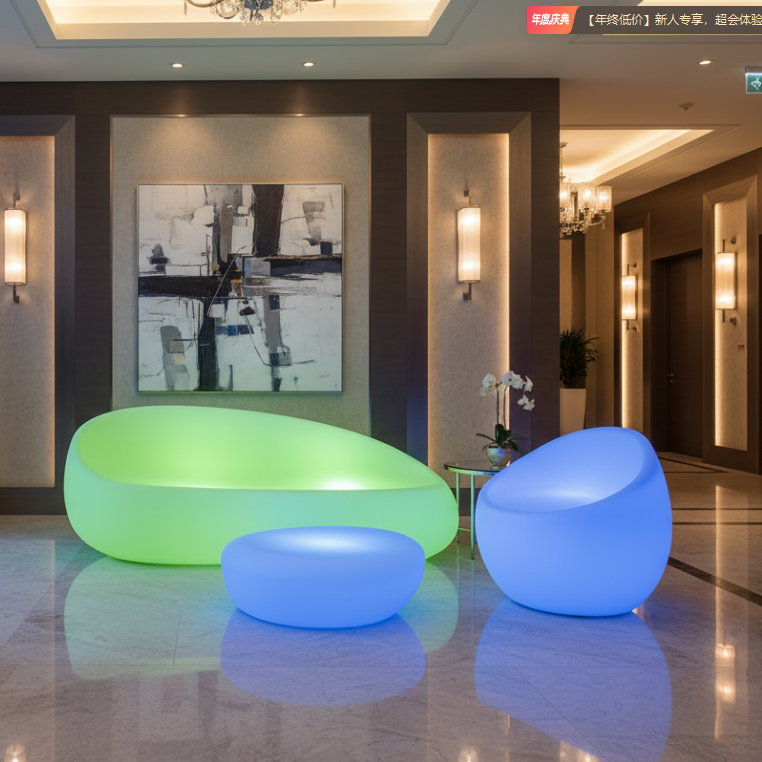
LED Furniture Rental Market Size, Growth Forecast, and Key Drivers (2024–2030)
Current market valuation and compound annual growth rate (CAGR) across Europe and North America
The LED furniture rental market is expanding rapidly across Europe and North America, driven by demand for dynamic event, retail, and workplace experiences. Global revenue is projected to reach $28.75 billion by 2025, growing at a 23% CAGR through 2030—supported by authoritative industry forecasts from Statista and Grand View Research. Europe currently holds a larger share of the regional market, reflecting stricter sustainability regulations, high urban event density, and proactive LED integration policies. North America is accelerating faster in volume growth, powered by scalable logistics networks and tech-forward venues—but lags slightly in CAGR due to slower commercial adoption. Both regions benefit from hybrid workspace redesign, though Europe’s regulatory tailwinds give it a marginal edge in long-term growth consistency.
Primary growth catalysts: post-pandemic event rebound, hybrid workspace evolution, and experiential retail demand
Three interlocking trends are accelerating adoption:
- Event industry resurgence: In-person gatherings have rebounded strongly, with LED furniture rentals for exhibitions rising 31% year-over-year in 2023 (EventMB Industry Pulse Report).
- Hybrid workspace redesign: Offices increasingly deploy illuminated workstations, lounge tables, and collaborative hubs to support engagement and flexibility—driving 19% annual growth in corporate sector rentals.
-
Experiential retail transformation: Brands use interactive LED counters, modular signage, and responsive display furniture to deepen shopper engagement; retail installations are growing at 25% annually (McKinsey & Company, Retail’s Next Chapter, 2024).
Together, these forces underpin a broader expansion trajectory—projecting global market value to exceed $122 billion by 2032.
Regional Dynamics: Contrasting Regulatory, Logistical, and Adoption Landscapes
Europe: Sustainability mandates, urban event density, and favorable LED integration policies
Europe’s leadership in LED furniture rental stems from policy alignment—not just demand. The EU Ecodesign Directive and national circular economy frameworks incentivize energy-efficient, repairable, and recyclable event infrastructure. Urban centers like London, Paris, and Berlin host over 60% of Europe’s high-profile festivals, product launches, and pop-up retail activations—creating concentrated, repeat demand. LED-integrated furniture helps venues cut lighting-related energy use by up to 40% versus conventional setups (European Environment Agency, 2023), reinforcing compliance and cost savings. Modular, standardized designs dominate the rental inventory, enabling cross-border reuse and reducing waste. While VAT harmonization remains incomplete, shared technical standards and mature last-mile delivery ecosystems support efficient operations—making sustainability a competitive advantage, not just a compliance requirement.
U.S. and North America: Scale-driven logistics networks, tech-enabled venues, and slower commercial—versus event-led—adoption
North America leverages its extensive transportation infrastructure and centralized warehousing to serve large-scale events—from Coachella to CES—with speed and geographic reach. Tech-enabled venues in Las Vegas, New York, and Miami regularly integrate LED furniture into immersive brand environments, often as part of turnkey production packages. Yet commercial adoption in offices and retail spaces remains comparatively cautious, constrained by higher upfront investment thresholds and fragmented energy certification requirements (e.g., varying state-level interpretations of Energy Star eligibility). Event planners drive ~75% of near-term demand, prioritizing visual impact and audience interaction—while corporate procurement teams await clearer ROI models around employee experience and space utilization metrics. Inventory management complexity increases with scale, but digital fleet tracking and predictive dispatch tools are narrowing operational gaps across major rental providers.
Competitive Structure and Supplier Landscape in the LED Furniture Rental Industry
Integrated event rental firms vs. specialized illuminated furniture suppliers: capabilities and market positioning
Two dominant supplier archetypes shape the market. Integrated event rental firms—such as PartyLite Events and Encore Event Technologies—offer LED furniture as part of broad equipment portfolios. Their strength lies in logistics scalability, bundled pricing, and single-vendor accountability—making them preferred for large-volume corporate bookings and multi-day trade shows. Specialized illuminated furniture suppliers—including Lumina Collective and Glowhaus—focus exclusively on design-led, technically advanced pieces: programmable surfaces, pressure-sensitive seating, and AR-synced displays. Their deep expertise in lighting engineering, content integration, and custom fabrication commands premium pricing—particularly in Europe, where they earn 32% higher average rental rates than integrated peers (Frost & Sullivan, LED Experience Economy Report, 2024). In North America, integrated firms capture 68% of volume-based corporate contracts, while specialists lead in high-margin creative sectors like art fairs and luxury brand launches.
Market fragmentation trends: innovation-driven niche players versus legacy conglomerates
The market remains highly fragmented—with innovation-driven startups capturing disproportionate influence despite limited scale. Since 2022, agile entrants have represented 45% of new supplier registrations, introducing IoT-connected furniture, biodegradable LED substrates, and AI-driven ambient lighting algorithms. These players thrive in high-margin urban markets and experiential niches, often partnering with designers and agencies rather than competing on price. Meanwhile, legacy conglomerates—including GES and Freeman—leverage decades-old warehouse footprints, enterprise sales teams, and embedded relationships with Fortune 500 clients to dominate recurring commercial contracts. However, their adoption of next-generation LED solutions consistently trails startups by 12–18 months, per independent benchmarking from the International Live Events Association (ILEA). This duality creates parallel growth paths: startups advance the technological frontier, while incumbents monetize reliability, compliance, and logistical muscle—especially in regulated European procurement cycles and North American B2B renewals.
Business Model Viability: Rental Economics, Utilization, and Commercial Scalability
Profitability in LED furniture rental hinges on disciplined utilization management—not just volume. With high fixed costs (LED component depreciation, climate-controlled storage, firmware updates, and certified technician maintenance), operators must sustain 60–70% fleet utilization to break even—demanding granular demand forecasting, seasonal pricing tiers, and flexible contract terms. Physical scalability faces real constraints: fragile LED modules require specialized transport and handling, limiting cost efficiencies beyond regional hub-and-spoke models. Successful operators mitigate this via hybrid asset strategies—owning core inventory (e.g., popular bar counters and lounge sets) while subcontracting peripheral or highly customized items—to preserve gross margins of 40–50%. Crucially, capital recovery timelines define viability: top performers recoup hardware investment within 18–24 months, primarily through premium pricing for time-sensitive, high-impact events like global product launches and immersive exhibitions. In stabilized markets, net margins settle between 15–20%, supported by repeat clients, extended rental durations, and bundled service packages (e.g., content design + installation + technical support).
FAQ Section
What is driving the growth of the LED furniture rental market?
The growth is driven by post-pandemic events resurgence, hybrid workspace redesigns, and the increasing demand for experiential retail setups.
Which region leads the LED furniture rental market?
Europe leads the market due to strict sustainability regulations, high urban event density, and favorable LED policies; however, North America is growing faster in volume due to scalable logistics networks.
What are the key challenges for LED furniture rental businesses?
Key challenges include managing fixed costs, maintaining high fleet utilization, and addressing physical scalability issues like fragile LED module transport.
Who are the major suppliers in the industry?
Major suppliers include integrated event rental firms like PartyLite Events and technology-focused specialized suppliers like Lumina Collective.
Table of Contents
- LED Furniture Rental Market Size, Growth Forecast, and Key Drivers (2024–2030)
- Regional Dynamics: Contrasting Regulatory, Logistical, and Adoption Landscapes
- Competitive Structure and Supplier Landscape in the LED Furniture Rental Industry
- Business Model Viability: Rental Economics, Utilization, and Commercial Scalability
- FAQ Section