EN
EN


LED Ball vs LED Cube: How to Choose for Events, Hospitality & Outdoor Spaces
Both bring cordless ambient light into a space. The better choice depends on what you want the lighting to do: create atmosphere, support a layout, add seating, or become a functional table.
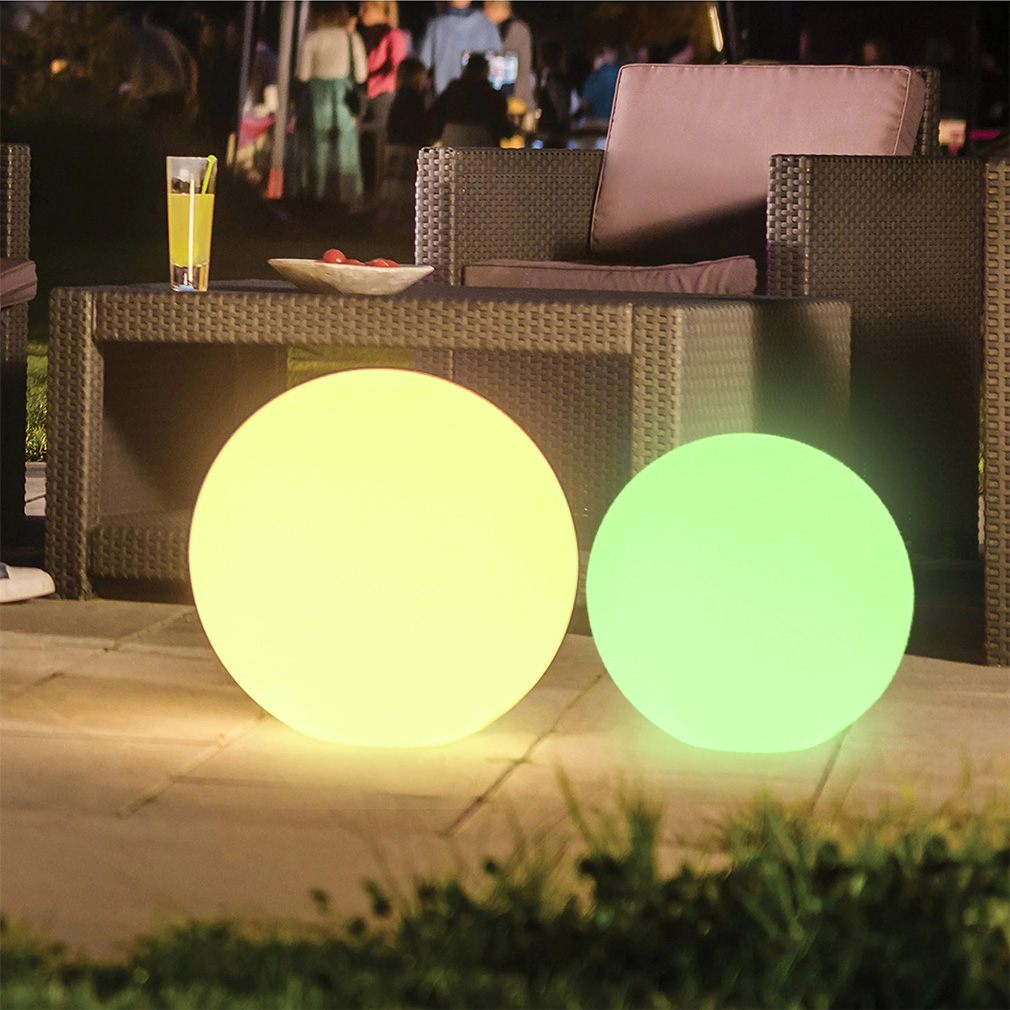
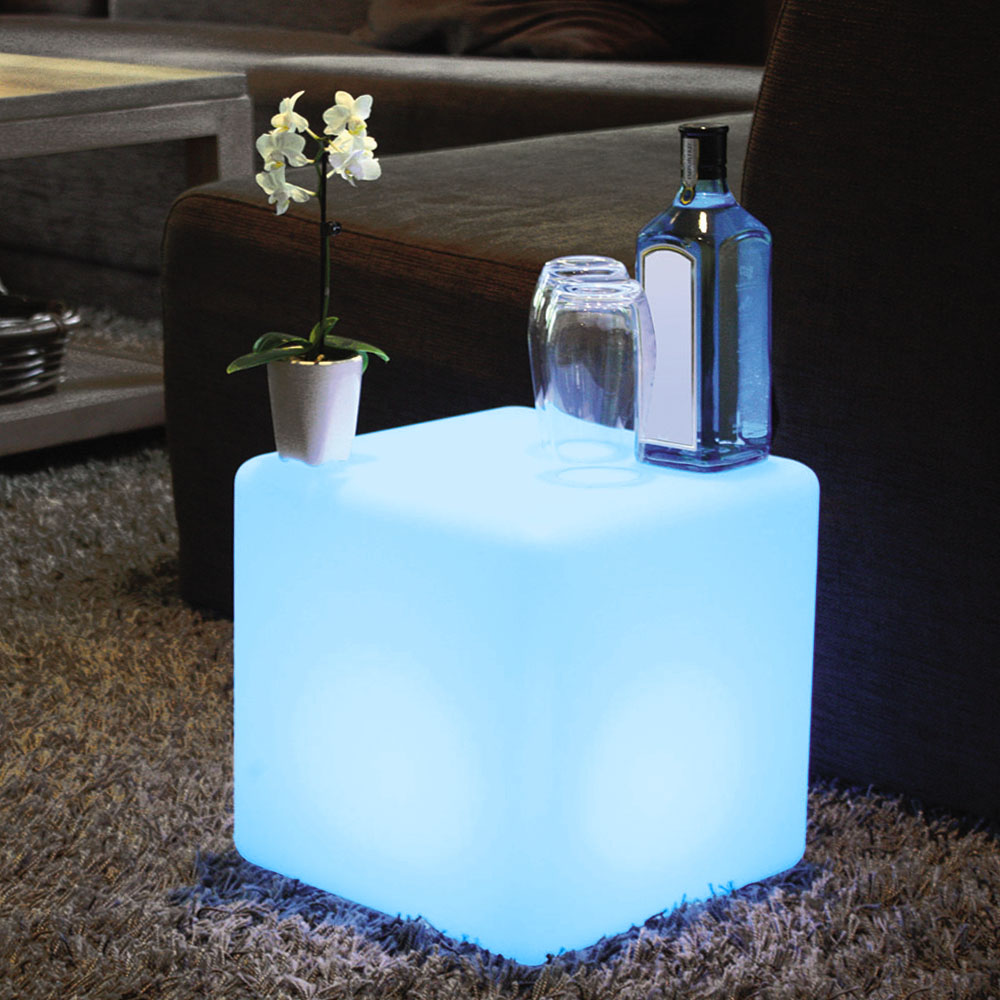
LED balls and LED cubes share many practical features: both are available as rechargeable, color-changing PE lighting products for indoor and outdoor use. But visually and functionally, they behave very differently in a project. The right choice usually comes down to one question: is the light mainly there to shape the atmosphere, or should it also become part of how people use the space?
Choose an LED Ball when you want a softer, more organic decorative effect. Choose an LED Cube when you want a cleaner geometric look and the option to use the illuminated object as part of the furniture layout. For many hospitality and event projects, the most effective solution is to combine both.
What do LED Balls and LED Cubes have in common?
Before comparing them, it helps to understand why the decision is not simply about basic specifications. Coolqing’s current LED ball and LED cube ranges include PE-body, rechargeable, multi-color products designed for indoor and outdoor applications. The main product pages list IP65 protection, multiple RGB colors and lighting modes, remote-control operation and typical working times of 8–12 hours.
Shared practical strengths
The decision point
The real difference is the role each shape plays in the space: the ball reads primarily as decorative ambient lighting, while the cube can move from decoration into furniture.
LED Ball vs LED Cube at a glance
| Decision factor | LED Ball | LED Cube |
|---|---|---|
| Visual language | Soft, organic, relaxed | Modern, geometric, structured |
| Primary role |
Best for atmosphere Decorative / ambient lighting |
Best for multi-function use Lighting + furniture / layout element |
| Garden & landscape | Excellent | Good for modern hardscape areas |
| Poolside & resort areas | Excellent for soft visual accents | Excellent where seating / tables are useful |
| Events & rentals | Entrances, stage edges, decorative clusters | Lounges, cocktail zones, branded seating / tables |
| Functional use | Mainly decorative lighting | 40 cm commonly used as a stool; 60 cm commonly used as a table |
| Best when... | You need atmosphere without visually “hardening” the space | You need lighting to support how people sit, gather or place objects |
When should you choose an LED Ball?
An LED ball is usually the easier starting point when the project is primarily about atmosphere. A round form has no obvious front, back or orientation, so it tends to blend naturally into landscaped and hospitality environments. Instead of looking like a piece of furniture, it reads as a glowing visual object.
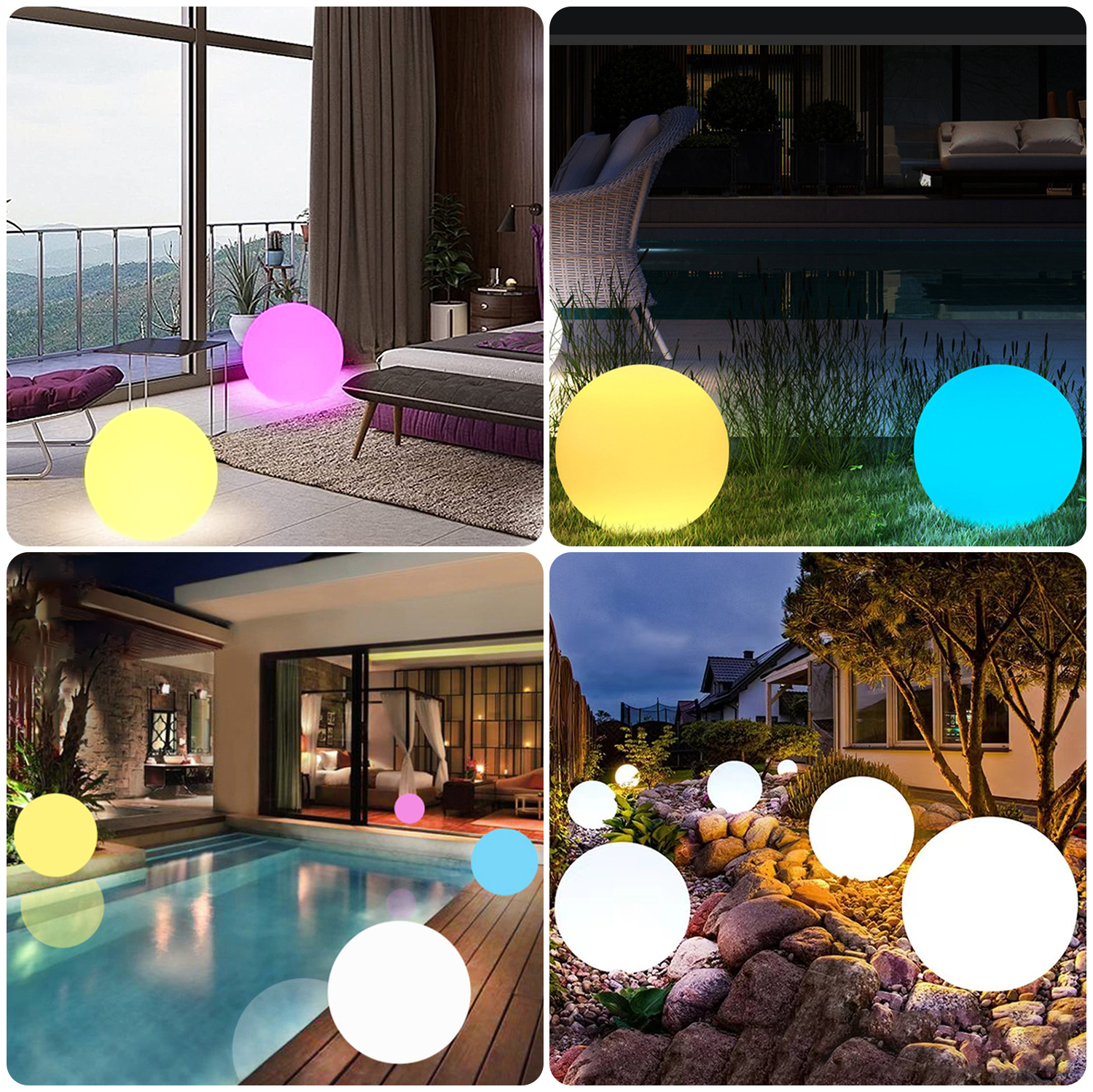
LED Ball works especially well for
Use different diameters to create depth. Smaller balls can work as supporting accents, while larger balls become focal points without making the scene feel too formal.
Explore LED Ball Lights →When should you choose an LED Cube?
The LED cube creates a more architectural and structured look. The biggest advantage is that the shape can do more than decorate: depending on the size, it can become a practical part of the layout. This makes cubes particularly useful in event lounges, hotel terraces, cocktail areas, bars, exhibitions and commercial spaces.
LED Cube works especially well for
Because the cube reads as an object with clear edges and surfaces, it can visually organize a space while still providing ambient light.
Explore LED Cube Lights →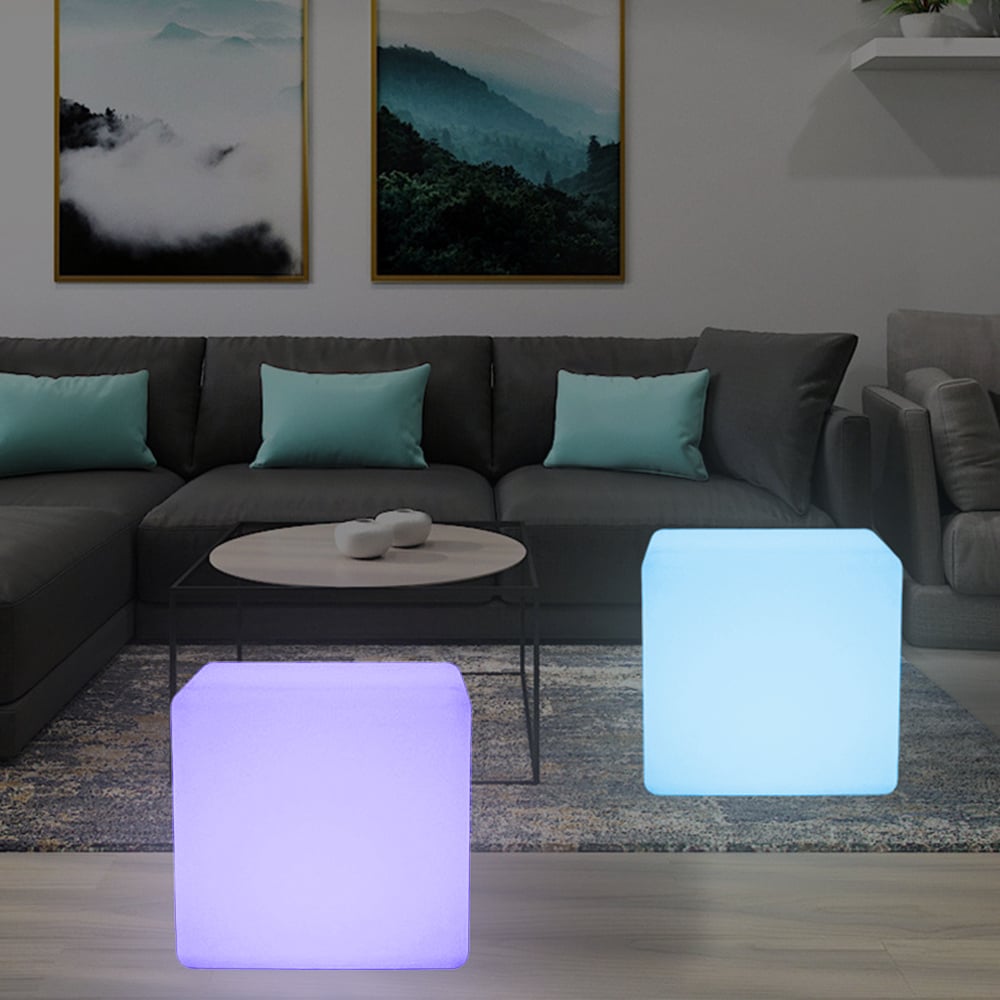
How to choose LED Cube size by function
Size changes the way an LED cube is perceived and used. Smaller cubes work mainly as decorative objects, while larger sizes move into furniture territory. For project planning, two practical reference points are especially useful:
Best for visual groups, smaller displays, pathways and tabletop-style lighting applications.
A practical size for event seating, lounges and flexible rental layouts.
Useful for lounge areas, side-table functions and projects that need a stronger furniture presence.
Which works better in different spaces?
Instead of asking which product is “better,” ask what role the lighting needs to play in each zone of the project.
Events & Rental
Ball: entrances, stage edges, decorative clusters.
Cube: lounge seating, cocktail areas, branded layouts.
Hotels & Resorts
Ball: gardens, paths, poolside atmosphere.
Cube: terrace lounges, seating and side-table zones.
Outdoor Commercial Spaces
Ball: softens landscapes and open areas.
Cube: works well around structured hardscape and social zones.
Can LED Balls and LED Cubes be used together?
Absolutely—and in many projects, that is more useful than choosing only one. The two shapes solve different visual and functional needs, so they can work as a coordinated system.
Use LED balls along planting, paths or the pool perimeter to create a softer ambient layer. Add 40 cm LED cubes around lounge zones for illuminated seating, or 60 cm cubes where an illuminated table is more useful. The result is a space with both atmosphere and function.
Use LED balls to create arrival moments, stage accents or decorative clusters. Use LED cubes in VIP, cocktail and lounge areas where guests need somewhere to sit, gather or place drinks.
A simple decision framework
When planning a project, use these four questions:
What should the light do?
Atmosphere only → start with Ball.
Atmosphere + function → consider Cube.
What visual language fits?
Soft / organic → Ball.
Modern / geometric → Cube.
How will people use the area?
If people need seating or table surfaces, Cube becomes more valuable.
So, LED Ball or LED Cube?
Choose an LED Ball when the main goal is to bring a softer decorative glow into the environment. Choose an LED Cube when the lighting also needs to become a functional part of the layout. And when a project contains several different zones, combining the two often gives you the most flexible solution.
Match the product to the space—not the other way around.
Explore the current LED Ball and LED Cube ranges, or send us your application, space type and target quantity. We can help you narrow down the most practical starting options for your project.
FAQ
Are LED balls and LED cubes suitable for outdoor use?
Current Coolqing LED ball and LED cube product pages include IP65-rated options designed for indoor and outdoor use. Always confirm the exact model specification for the project.
Can an LED cube be used as furniture?
Yes. Depending on the size and model, LED cubes can be used as decorative lighting, stools, side tables or layout elements. A 40 cm cube is commonly used as a stool, while a 60 cm cube is commonly used as a table.
Which is better for a garden or landscape?
LED balls are usually the more natural choice because the rounded shape blends softly with planting, pathways and poolside environments. Cubes can still work well in more architectural or modern hardscape settings.
Which is better for an event rental company?
Both can be useful. LED balls are flexible decorative accents, while LED cubes can add seating or table functions. Many rental collections benefit from carrying both shapes.
Can LED balls and LED cubes be mixed in one project?
Yes. Mixing them is often the strongest solution: balls create the ambient layer, while cubes can support lounge, seating or table zones.
 Hot News