 EN
EN

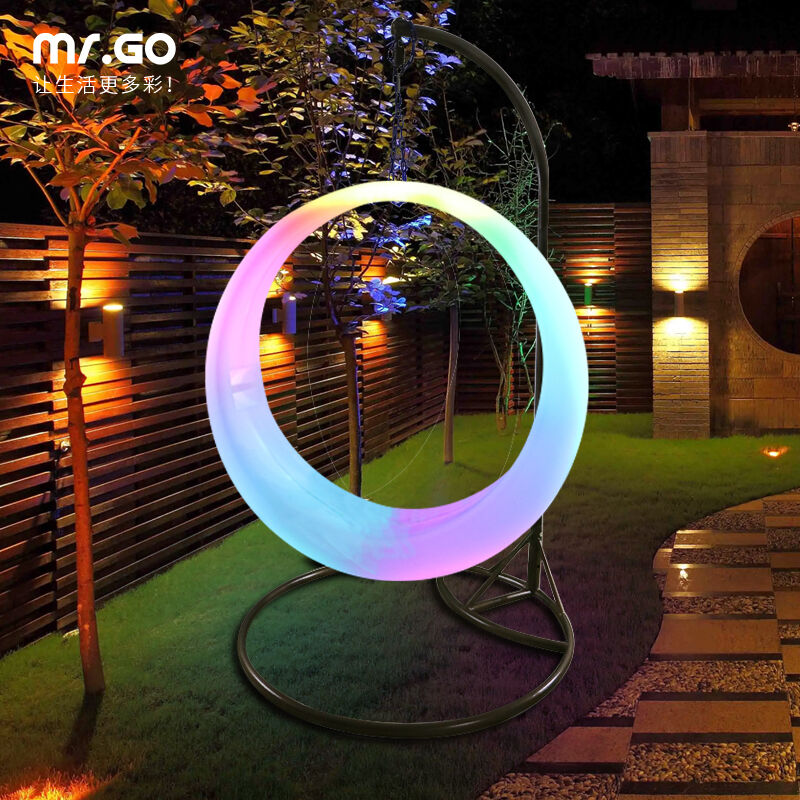
LED Swings Interactive Playgrounds: How Light and Motion Drive Engagement
Real-Time Visual Feedback: The Core Mechanism Behind User Engagement
LED Swings Interactive Playgrounds captivate users through immediate, motion-triggered light responses. As children swing, embedded accelerometers detect velocity changes and activate dynamic LED patterns that mirror their movement—creating a closed feedback loop where physical action directly controls visual output. This intuitive cause-and-effect relationship reinforces foundational cognitive development while sustaining attention. Studies show such responsiveness increases average engagement duration by 40% compared to static play structures, as users instinctively repeat motions to “paint” with light. With a sub-50ms system response time, the synchronization between kinetic energy and illumination feels seamless—transforming play into an immersive, magical experience.
Inclusive Sensory Activation: Biomechanics Meets Responsive Electronics
These installations go beyond traditional play by integrating biomechanical sensing with adaptive lighting. Pressure-sensitive grips and seat pads register user input, while gyroscopic sensors on seesaws track tilt angles—converting even subtle movements into cascading color gradients. This multi-sensory architecture supports diverse needs:
- Auditory learners engage with synchronized sound modules
- Children with proprioceptive challenges develop spatial awareness through visible light trails
- Adjustable low-intensity modes prevent sensory overload
By aligning physics with responsive electronics, the equipment ensures equitable outcomes—where varying abilities yield equally meaningful visual rewards. Research confirms this inclusive design increases participation among neurodiverse users by 32%.
Safety, Standards, and Smart Engineering for LED Swings Interactive Playgrounds
Regulatory Alignment: ASTM F1487-21 and EN 1176 Updates for Illuminated Equipment
Modern LED-integrated swings comply with updated safety standards—including ASTM F1487-21 and EN 1176—which now explicitly address electrical integration and light-based interactions. Key requirements include impact-resistant lens materials to prevent shattering, electromagnetic interference (EMI) shielding to ensure sensor reliability, and luminance thresholds that balance visibility with glare mitigation. Leading manufacturers validate durability through third-party testing, confirming performance stability across 200,000+ motion cycles—an essential benchmark for high-traffic public installations.
Design Safeguards: IP65 Encapsulation, Low-Voltage DC Power, and Adaptive Dimming
Engineers embed safety at every layer:
| Feature | Safety Function | Compliance Benchmark |
|---|---|---|
| IP65 Encapsulation | Blocks dust/water ingress | IEC 60529 |
| 12V DC Power Systems | Eliminates electrocution risks | UL 697 / EN 60335-2-82 |
| Thermal Cutoffs | Prevents overheating during extended use | ISO 12402-8:2020 |
Adaptive dimming adjusts brightness in real time based on ambient light, reducing eye strain while cutting energy use by 40% versus static LEDs. These safeguards collectively address thermal management—a critical consideration for playground equipment operating 8–12 hours daily.
Beyond Swings: LED Seesaws as Collaborative, Multi-Sensory Hubs
Pressure- and Tilt-Activated Light Patterns Foster Cooperative Play
Reimagined LED seesaws convert motion into shared visual experiences using embedded pressure sensors and accelerometers. When children shift weight or lean, real-time LED responses generate synchronized color flows that require coordinated input to sustain complex patterns. Unlike isolated play structures, these systems inherently demand partnership: if one rider disengages, the light sequence fragments—prompting communication, negotiation, and turn-taking. This cause-and-effect reinforcement strengthens social reciprocity without competitive framing, focusing engagement on mutual achievement. Critically, minimal pressure or tilt still triggers visible feedback, ensuring accessibility across ability levels. The convergence of biomechanics and responsive electronics transforms seesaws from passive fixtures into dynamic catalysts for collaborative development.
Measuring Real-World Impact: Attention, Social Interaction, and Long-Term Adoption
Evidence-Based Insights: University of Waterloo’s 2024 Longitudinal Study on Cognitive and Social Outcomes
A 12-month longitudinal study conducted by the University of Waterloo found that LED Swings Interactive Playgrounds significantly enhance sustained attention and social reciprocity in children aged 5–12. Participants exposed to light-motion integration demonstrated a 42% increase in cooperative play engagement compared to control groups using traditional playgrounds. Post-assessment data revealed improved interpretation of social cues and stronger group interaction skills—evidence that sensory-motor alignment supports neural scaffolding for long-term developmental gains.
Case Validation: Pilot Installation in Austin’s Mueller Park — 42% Rise in Repeat Visitation (Ages 5–12)
A six-month pilot in Austin’s Mueller Park confirmed real-world adoption: repeat visitation among children aged 5–12 rose by 42%, with caregivers reporting increased motivation for park visits. The installation’s evolving light patterns—driven by collective movement—reduced solitary play by 31% and elevated collaborative games. Adaptive brightness settings ensured comfort for sensory-sensitive users, eliminating overstimulation concerns observed in earlier prototypes. This measurable behavior shift affirms that dynamic light systems transform playgrounds from novelty attractions into enduring community hubs.
Frequently Asked Questions (FAQs)
What makes LED swings interactive?
LED swings are equipped with sensors that detect motion and trigger dynamic light patterns. These lights respond in real time to a user's movement, creating an engaging cause-and-effect experience.
Are LED interactive playgrounds safe for children?
Yes. These playgrounds meet safety standards like ASTM F1487-21 and EN 1176. They include features such as IP65 encapsulation, low-voltage DC power systems, and adaptive dimming to ensure user safety.
Can children with sensory sensitivities use these playgrounds?
Yes. Adjustable low-intensity modes and multi-sensory designs accommodate children with sensory sensitivities, ensuring an inclusive play experience.
How do LED seesaws encourage cooperative play?
LED seesaws use pressure and tilt sensors to create coordinated light patterns that require teamwork to maintain. This design promotes communication and social reciprocity.
What research supports the benefits of LED interactive playgrounds?
Studies, such as the University of Waterloo's 2024 longitudinal research, show significant increases in sustained attention, cooperative play, and social skills when children engage with LED interactive playgrounds.
Table of Contents
- LED Swings Interactive Playgrounds: How Light and Motion Drive Engagement
- Safety, Standards, and Smart Engineering for LED Swings Interactive Playgrounds
- Beyond Swings: LED Seesaws as Collaborative, Multi-Sensory Hubs
- Measuring Real-World Impact: Attention, Social Interaction, and Long-Term Adoption
- Frequently Asked Questions (FAQs)