 EN
EN

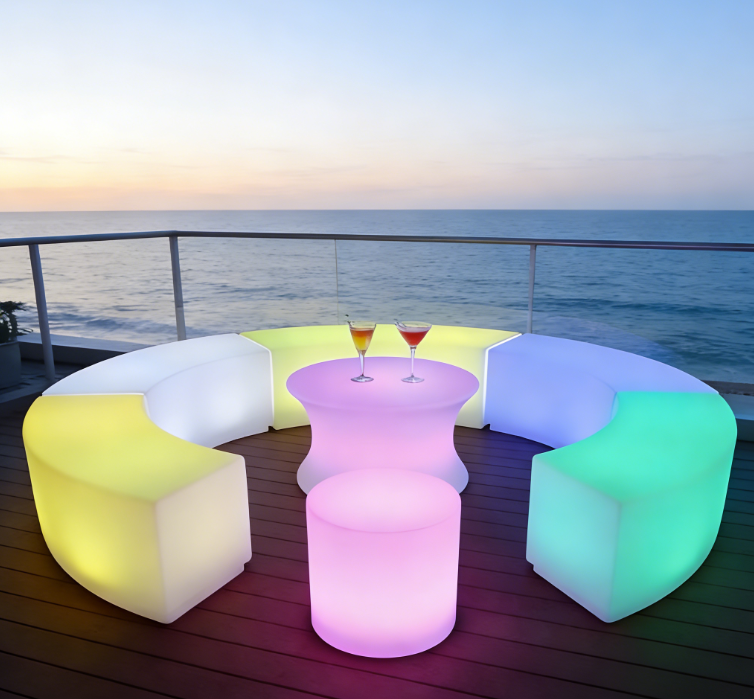
Defining the Futuristic Theme: Neon Aesthetics and LED Integration Principles
Why Neon + LED Furniture Defines Modern Futurism in Event Design
Neon and LED furniture has redefined futuristic event design by merging visual drama with interactive technology. Unlike static decor, these pieces create luminous environments where guests become part of the spectacle—think glowing seating that responds to movement or LED tables projecting dynamic patterns. This synergy transforms venues into experiential realms, aligning with how 78% of event planners cite immersive lighting as crucial for memorable gatherings (Event Trends Report 2024). Neon’s retro-futuristic glow complements LED’s programmable versatility, allowing designers to craft multi-sensory narratives through customizable color flows and intensity shifts—without overwhelming guests.
Balancing Visual Impact with Safety, Accessibility, and Guest Comfort
Responsible integration demands prioritizing guest well-being without compromising impact. Excessive brightness, flicker, or exposed wiring can trigger discomfort or pose tripping hazards—especially critical given that 32% of attendees cite poor accessibility as a barrier to engagement (ADA Event Study 2023). Mitigate risk using diffused LED panels instead of direct beams, securing cables within floor channels, and maintaining ADA-compliant pathways around all interactive installations. Choose non-flickering, low-heat LED sources near seating zones, and incorporate UV-reactive fabrics thoughtfully—these enhance the theme safely while avoiding UV exposure concerns. The result is a dazzling yet inclusive space where comfort and spectacle coexist.
Selecting and Styling Futuristic Neon and LED Furniture for Immersive Spaces
Interactive Seating & Statement Pieces: LED Cube Benches, Glow Tables, and Neon Ring Centrepieces
LED cube benches, glow tables, and neon ring centerpieces anchor immersive futuristic spaces—not just as decor, but as responsive environmental tools. Cube benches shift colors on touch or weight detection; glow tables illuminate drink placements via pressure-sensitive surfaces; neon rings serve as adjustable-brightness focal points that naturally zone conversation areas. These pieces balance spectacle with practicality:
- Modular designs allow reconfiguration across event phases
- Low-heat LED strips ensure prolonged use remains safe
- Dimmable controls prevent visual fatigue
Material Synergy: UV-Reactive Surfaces, Reflective Finishes, and Color-Enhancing Textures
Strategic material pairings multiply lighting impact. UV-reactive fabrics on upholstery or bar counters absorb and re-emit blacklight, generating floating geometric patterns. Reflective acrylic tabletops scatter neon glows across floors and ceilings—effectively doubling perceived luminosity. Textured metallic finishes on legs or bases fracture light into spectral fragments, adding depth without glare. To support this layering:
- Matte flooring minimizes competing reflections
- Non-porous surfaces simplify post-event cleanup
- Heavier textiles drape more predictably under intense lighting
Architecting Light as Structure: Stage, Layout, and Dynamic Lighting Systems
Creating Depth and Dimension with Black Light Zones and Layered Neon Accents
Ultraviolet (UV) lighting zones—strategically paired with layered neon accents across floor, mid-air, and wall planes—generate immersive 3D illusions with minimal physical infrastructure. Research shows layered lighting increases perceived venue size by 40% (Event Design Journal 2023). Prioritize UV-reactive textiles on seating and décor to amplify fluorescence safely and consistently.
| Dimension Technique | Effect | Implementation Tip |
|---|---|---|
| Elevated Neon Frames | Creates floating focal points | Position 30–50 cm above eye level |
| Backlit Textured Panels | Adds shadow play movement | Combine perforated metals with color-changing LEDs |
| Underfoot Glow Paths | Guides flow with interactive engagement | Use pressure-sensitive floor tiles |
Synchronized Lighting Control: DMX Programming Across Furniture, Ceilings, and Floors
Centralized DMX (Digital Multiplex) systems unify control across all luminous elements—from modular lounge furniture to overhead grids and floor installations. This enables pixel-perfect synchronization of light sequences with music, time of day, or real-time guest interaction. Integrated programming reduces energy consumption by up to 60% compared to isolated fixtures (Sustainable Events Report 2023), while gradual transitions between zones preserve visual comfort. Crucially, consistent illumination levels across accessible pathways ensure safety remains embedded in the aesthetic—not added as an afterthought.
FAQ
Why are neon and LED furniture popular in modern event designs?
Neon and LED furniture create immersive environments with dynamic lighting effects that enhance guest experiences and align with retro-futuristic aesthetics.
How can designers ensure safety while using LED installations?
Safety measures include using diffused LED panels, securing cables, maintaining ADA-compliant paths, and choosing low-heat, non-flickering lighting sources.
What are some examples of neon and LED furniture for events?
Examples include LED cube benches, glow tables, and neon ring centerpieces with features like touch-sensitive lighting and adjustable brightness.
Why is material synergy important in futuristic designs?
Material synergy like UV-reactive fabrics and reflective finishes enhances lighting effects, minimizes glare, and simplifies post-event cleanups, adding functionality and visual appeal.
What is the role of DMX programming in event lighting?
DMX programming synchronizes all lighting across furniture and venue elements, ensuring energy efficiency, immersive experiences, and enhanced safety.