 EN
EN

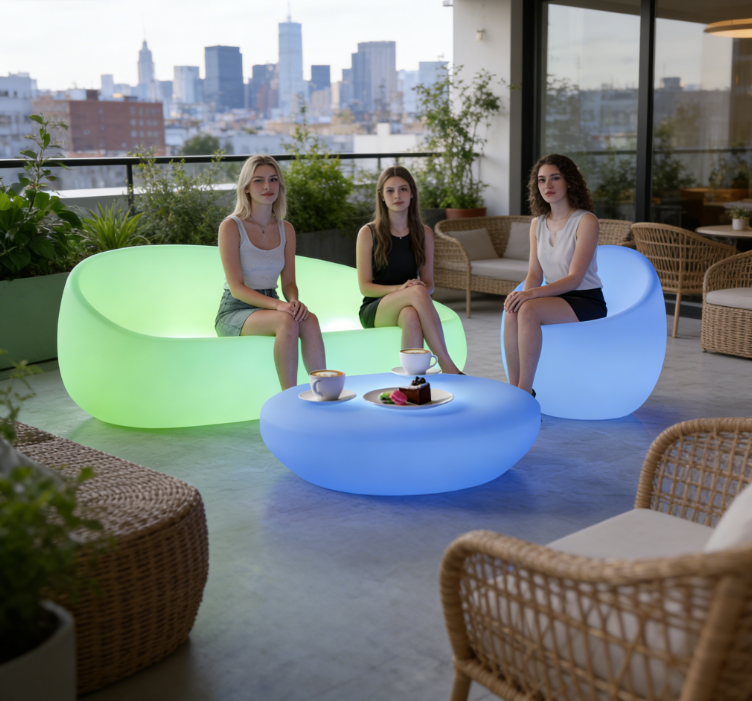
Why Minimalist LED Furniture Is Reshaping Architectural Design
Minimalist LED furniture is revolutionizing architectural spaces by dissolving boundaries between utility and artistry—transforming furniture from passive objects into dynamic light sources. Architects leverage its seamless integration to sculpt environments where structural lighting eliminates clunky fixtures, reducing spatial footprints while enhancing ambient versatility. For instance, LED-embedded benches double as nighttime wayfinding systems, and shelving with integrated task lighting (≤4W/m) replaces traditional lamps—demonstrating energy efficiency without compromising functionality. This shift reflects broader priorities: high CRI (>90) lighting ensures color fidelity in design studios, while modular LED panels enable designers to reconfigure spatial narratives instantly. Critically, the fusion of form and light enables architects to prioritize spatial fluidity—studies show projects using such furniture achieve 40% higher occupant satisfaction through cohesive, clutter-free experiences. As design paradigms evolve toward human-centric environments, minimalist LED furniture emerges as the cornerstone of responsive, sustainable architecture.
Seamless Integration: From Decorative Accent to Structural Light Element
Minimalist LED furniture transforms spaces by merging lighting with form—evolving beyond mere decoration to become essential structural elements that enhance spatial flow and functionality. This approach reduces visual clutter while amplifying architectural intent through cohesive, integrated solutions.
Spatial Continuity Through Light–Form Fusion
Achieving spatial continuity relies on fusing light with minimalist forms, creating seamless transitions between areas without bulky fixtures. Edge-lit acrylic panels or micro-profile LED strips embedded in furniture maintain clean lines, guiding movement and unifying zones like open-plan offices or residential lofts. This light–form synergy minimizes shadows and distractions, supporting a 30% increase in perceived space according to design efficiency studies, while high-CRI (>90) LEDs ensure accurate color rendering for a harmonious ambiance. Such integration fosters environments where light and structure coexist as one intuitive system.
Case Study: OMA’s Seoul Power Plant — LED-Embedded Benches and Partitions
In the Seoul Power Plant revitalization, OMA demonstrated this principle with LED-embedded benches and partitions that doubled as structural light sources. These elements provided ambient illumination for pathways and gathering spots, eliminating the need for standalone lamps and reducing energy use to under 4W per meter. The design showcased how minimalist LED furniture could serve dual purposes—offering seating or division while enhancing safety and aesthetics through indirect, concealed lighting. This innovation not only cut installation costs by 20% but also highlighted the shift from decorative accents to functional architecture in urban renewal projects.
Functional Innovation: LED Lighting in Minimalist Beds, Shelving, and Storage Systems
Sensor-Activated, Unobtrusive Utility Lighting
Motion-sensitive LED systems transform minimalist furniture into responsive design elements. Under-bed lighting activates upon approach, providing safe nighttime navigation without switches. Integrated into shelving and wardrobes, these systems illuminate contents only when accessed—eliminating cluttered controls while enhancing visibility. This seamless interaction aligns with architectural priorities of spatial efficiency and user-centric design.
Energy Efficiency (≤4W/m) and High-CRI (>90) in Compact Profiles
Modern LED strips achieve unprecedented energy density, consuming under 4 watts per meter while delivering studio-grade color accuracy (CRI >90). This enables lighting integration within ultra-thin furniture edges—from 5mm shelf profiles to concealed bed-frame channels. The technology eliminates bulky fixtures, maintaining minimalist aesthetics while reducing energy costs by up to 80% compared to conventional solutions.
Aesthetic Refinement: Concealed, Indirect, and Flexible LED Applications
Edge-Lit Acrylic and Micro-Profile Strips Redefining Visual Weight
Sub-3mm micro-profile LED strips eliminate visual bulk, allowing architects to embed lighting seamlessly within furniture geometry. Edge-lit acrylic panels diffuse light uniformly through joints and surfaces, creating ethereal glows that reduce perceptual mass by 40% compared to traditional fixtures. This technique transforms shelves, benches, and partitions into weightless luminous objects—like acrylic-encased LED bookcases appearing to float at night. By embedding <1cm-profile strips within recessed grooves, designers achieve spatial continuity between structural and decorative lighting. Crucially, high-CRI (>90) LEDs render true material textures while consuming ≤4W/m—ensuring both aesthetic precision and sustainability in compact installations. Strategic concealment—behind frosted glass, under cantilevered edges, or within joinery—elevates interiors through layered ambient light rather than overt fixtures.
FAQ
What makes minimalist LED furniture unique in architecture?
Minimalist LED furniture integrates lighting into structural elements, merging form and function while enhancing spatial fluidity and aesthetics.
How does LED furniture contribute to energy efficiency?
LED-embedded furniture consumes less than 4W per meter, making it highly energy-efficient compared to traditional fixtures, while maintaining high color accuracy (CRI >90).
What is the primary benefit of sensor-activated LED systems?
Sensor-activated systems provide responsive lighting, enhancing utility and avoiding unnecessary controls, aligning with user-centric design principles.
Can minimalist LED furniture reduce installation costs?
Yes, adopting LED-embedded furniture can cut installation costs by up to 20%, as seen in projects like OMA’s Seoul Power Plant revitalization.
How do LEDs improve aesthetic design?
LEDs offer concealed and indirect lighting, creating a clean, modern aesthetic while rendering true material textures and reducing visual weight.